Closing the Patrol Shift Gap
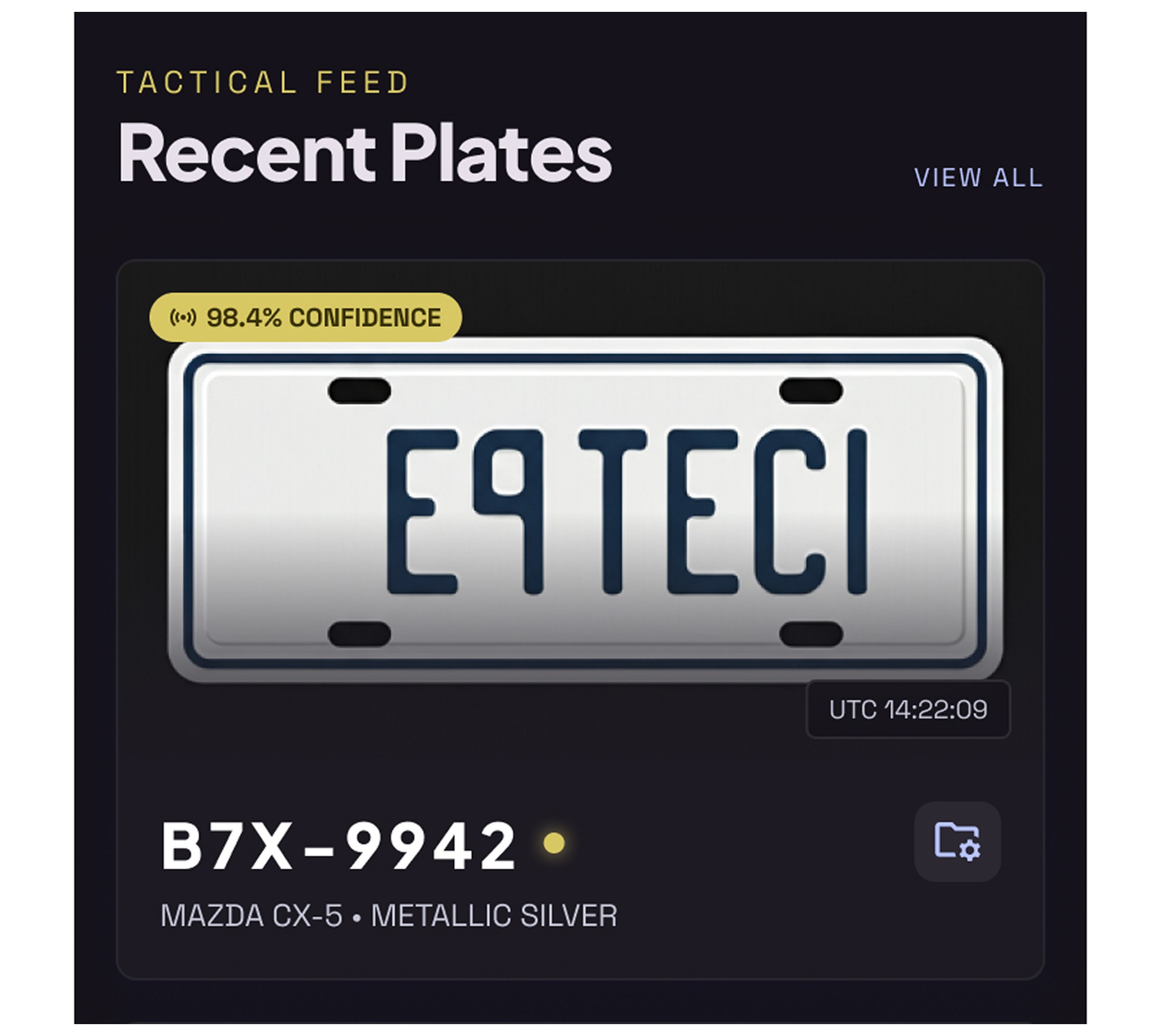
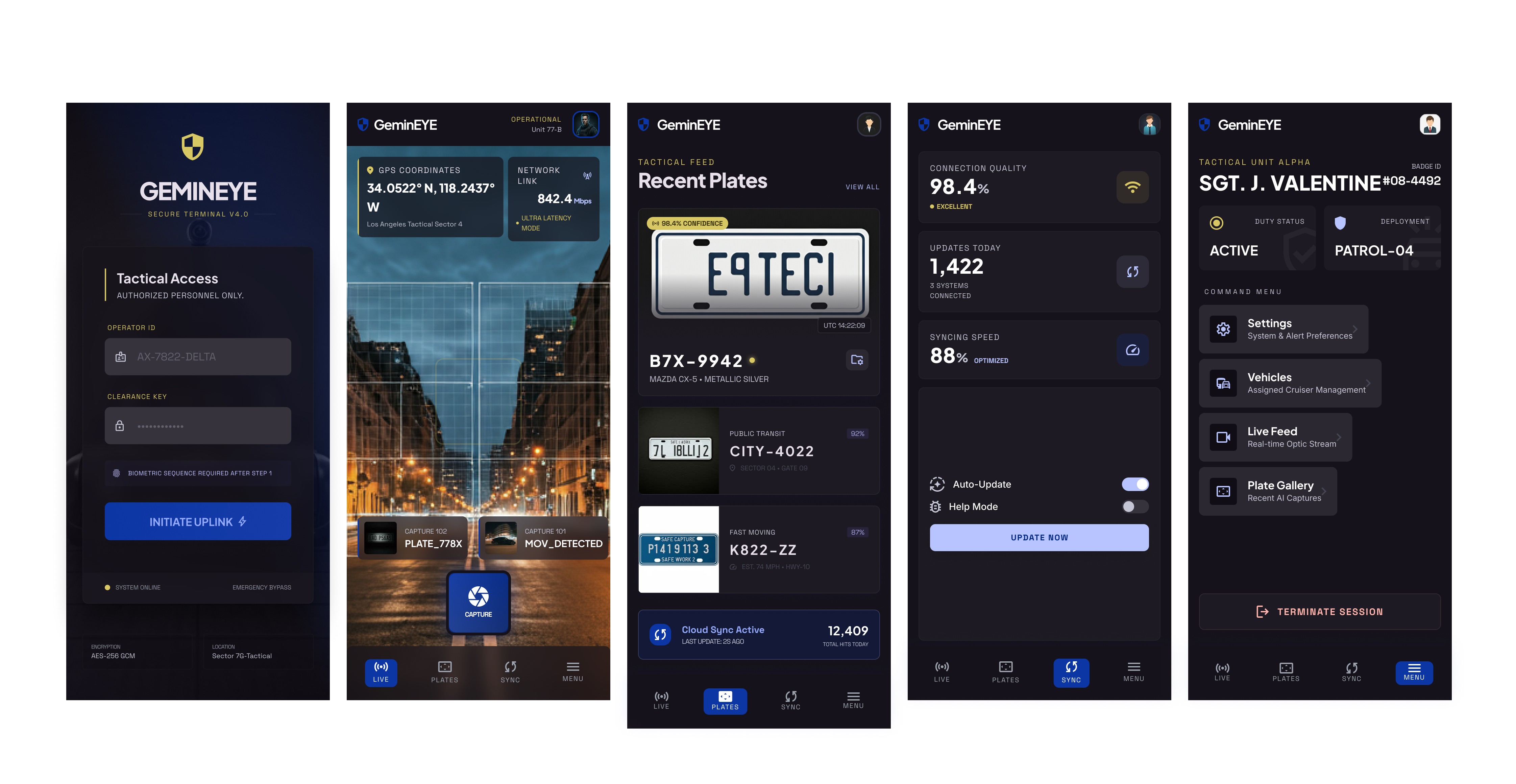
Every shift ends. But the work doesn't. SenForce is a traffic enforcement SaaS platform built around one uncomfortable truth, when officers clock out, unresolved violations don't follow them. They disappear. SenForce closes that gap with a connected ecosystem of mobile, processing, analytics, and user management tools that keep enforcement running regardless of who is on duty.
ROLE
PROBLEM
The officers weren't failing. The handoff was. Traffic enforcement ran on rotating shifts and every time one ended, pending violations vanished with it. Incoming officers restarted from zero. Tickets crept toward expiry. Supervisors had no view into what was slipping through. The gap nobody talked about was quietly costing the system its credibility.
RESULTS
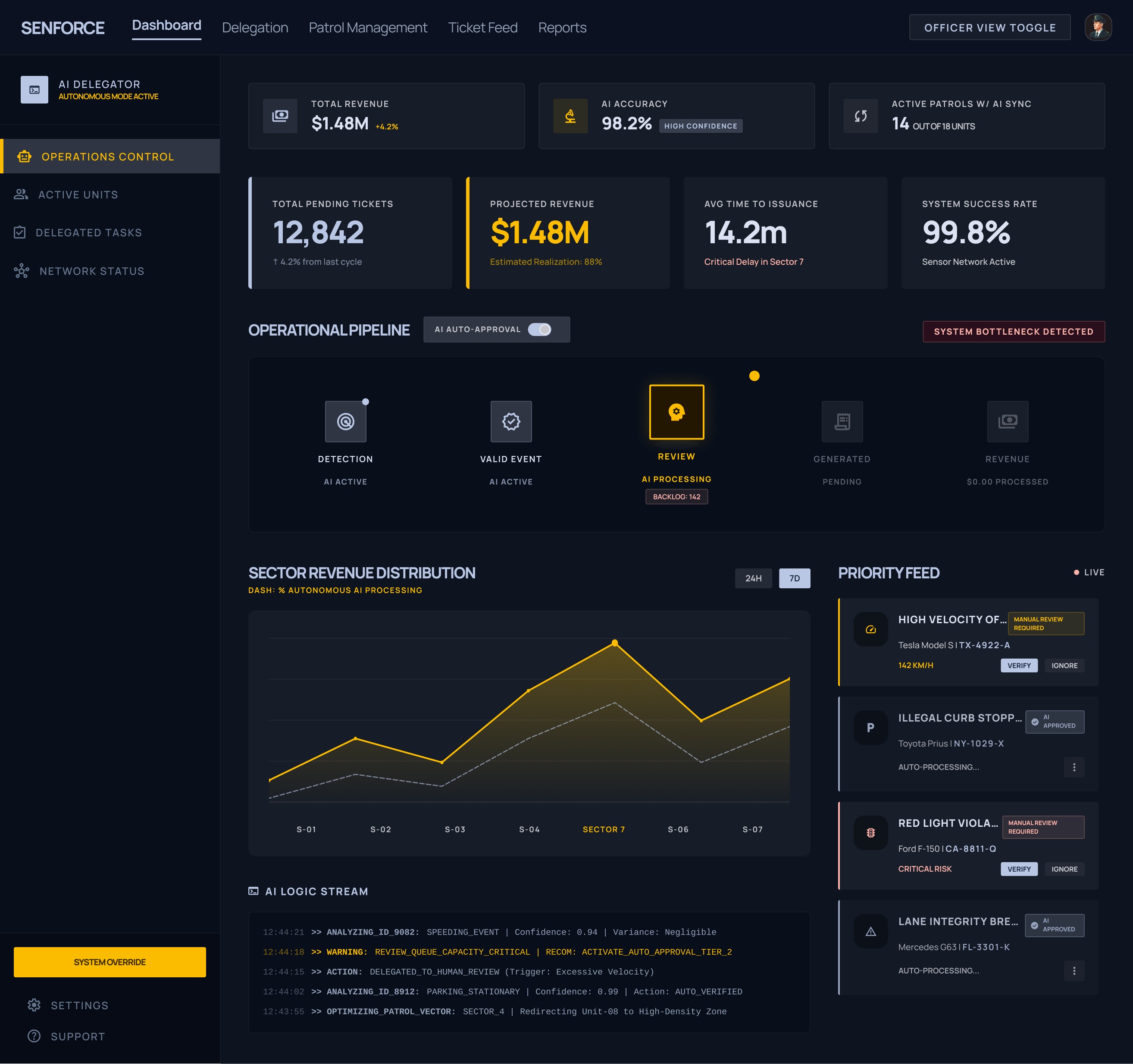
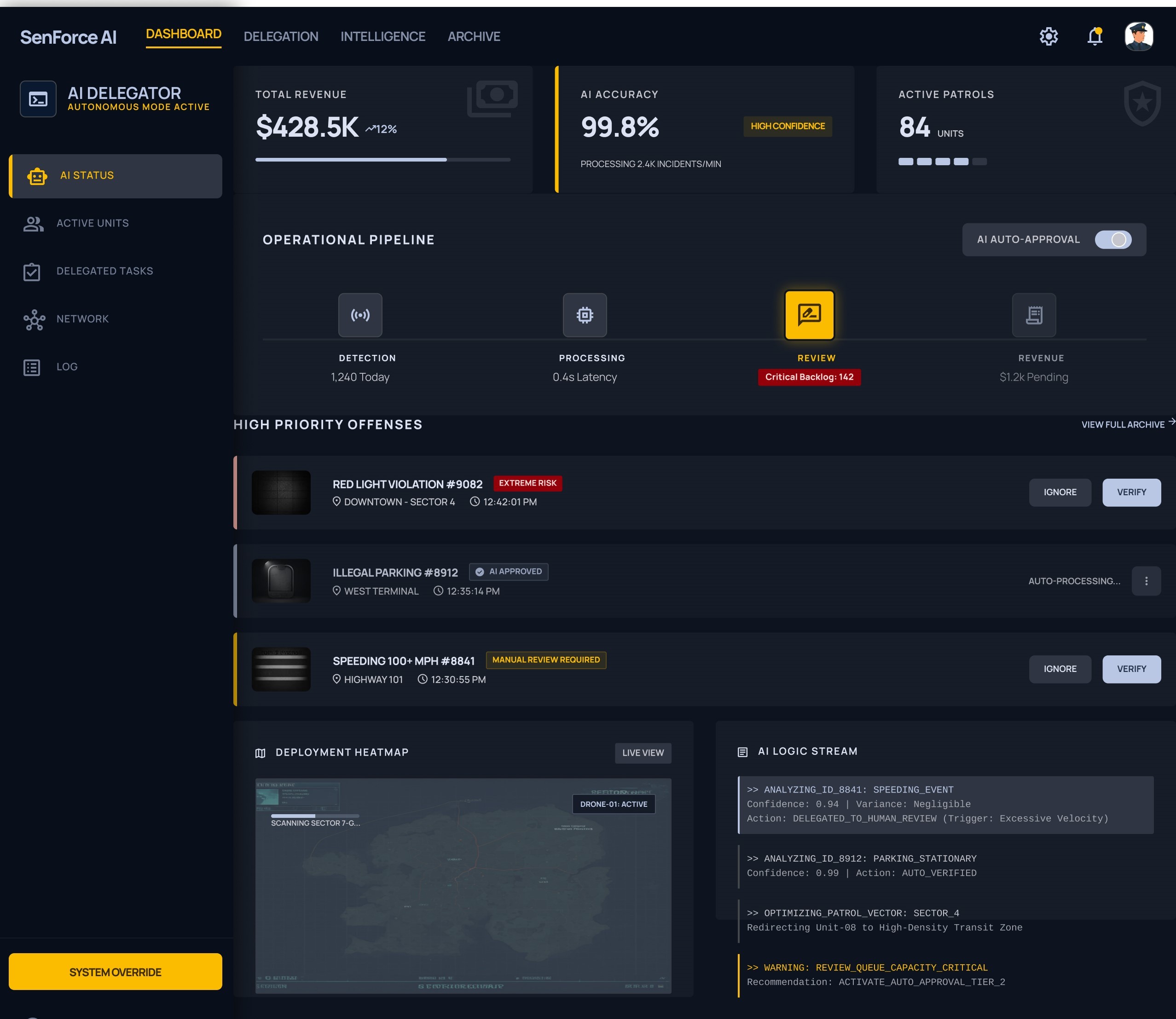
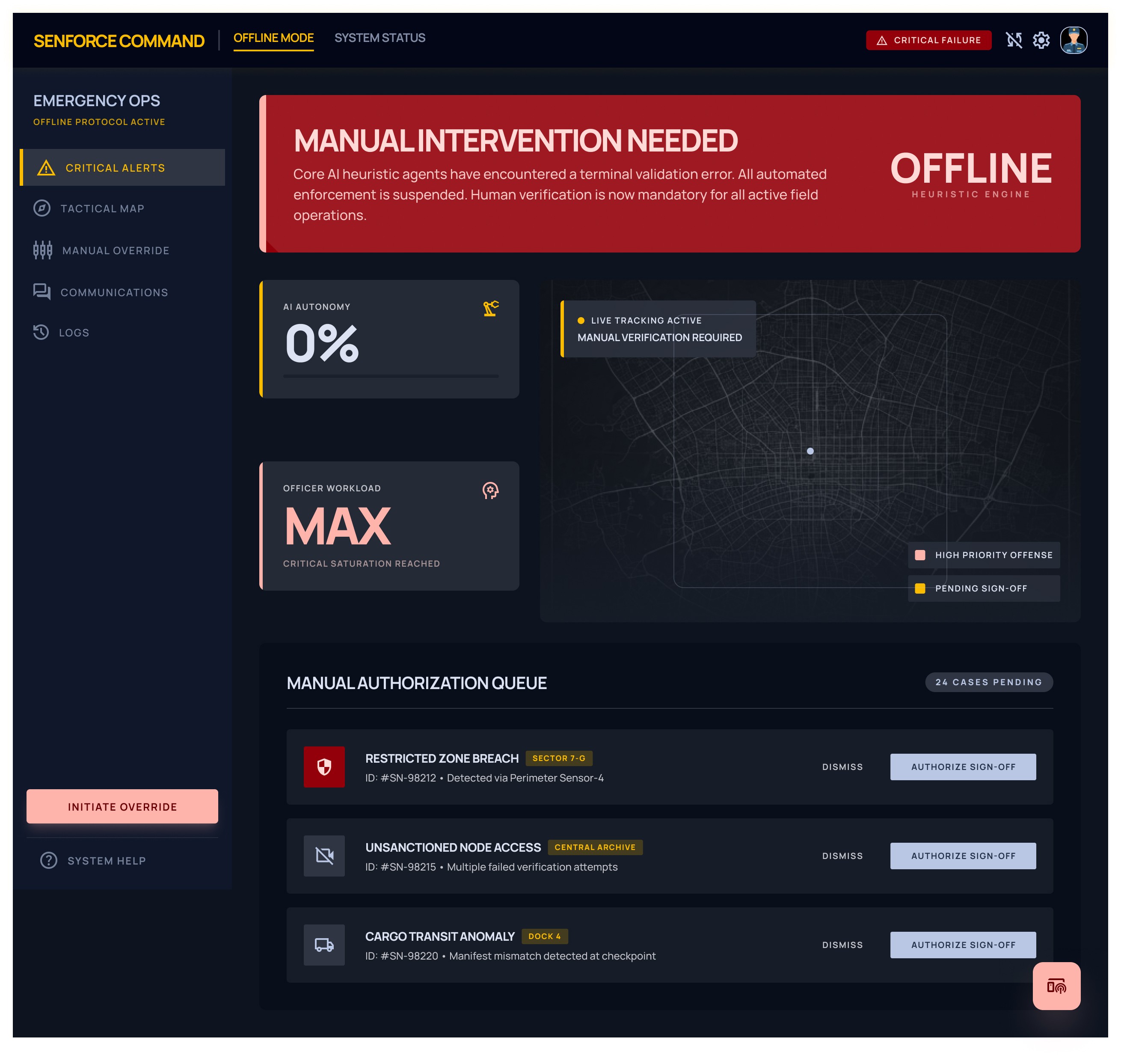
The shift gap closed. Incoming officers could now see every unresolved case from the previous rotation and pick up without missing a beat. Manual back-and-forth was replaced by a centralized processing dashboard. Supervisors gained live visibility into team performance, zone compliance, and aging cases. Every action became traceable, accountability was no longer a policy. It was built into the product.
Designing with intent
Before a single screen was drawn, the two roles at the heart of this system were mapped separately. Junior officers needed speed, any friction in the field meant a missed ticket. Senior supervisors needed to control visibility across shifts, zones, and teams. Competitor analysis of enforcement and field operations platforms shaped the role-based architecture. Affinity mapping pointed to one insight above all others: continuity was the problem, not capability. That became the north star everything else was built around.
Simplify the complex
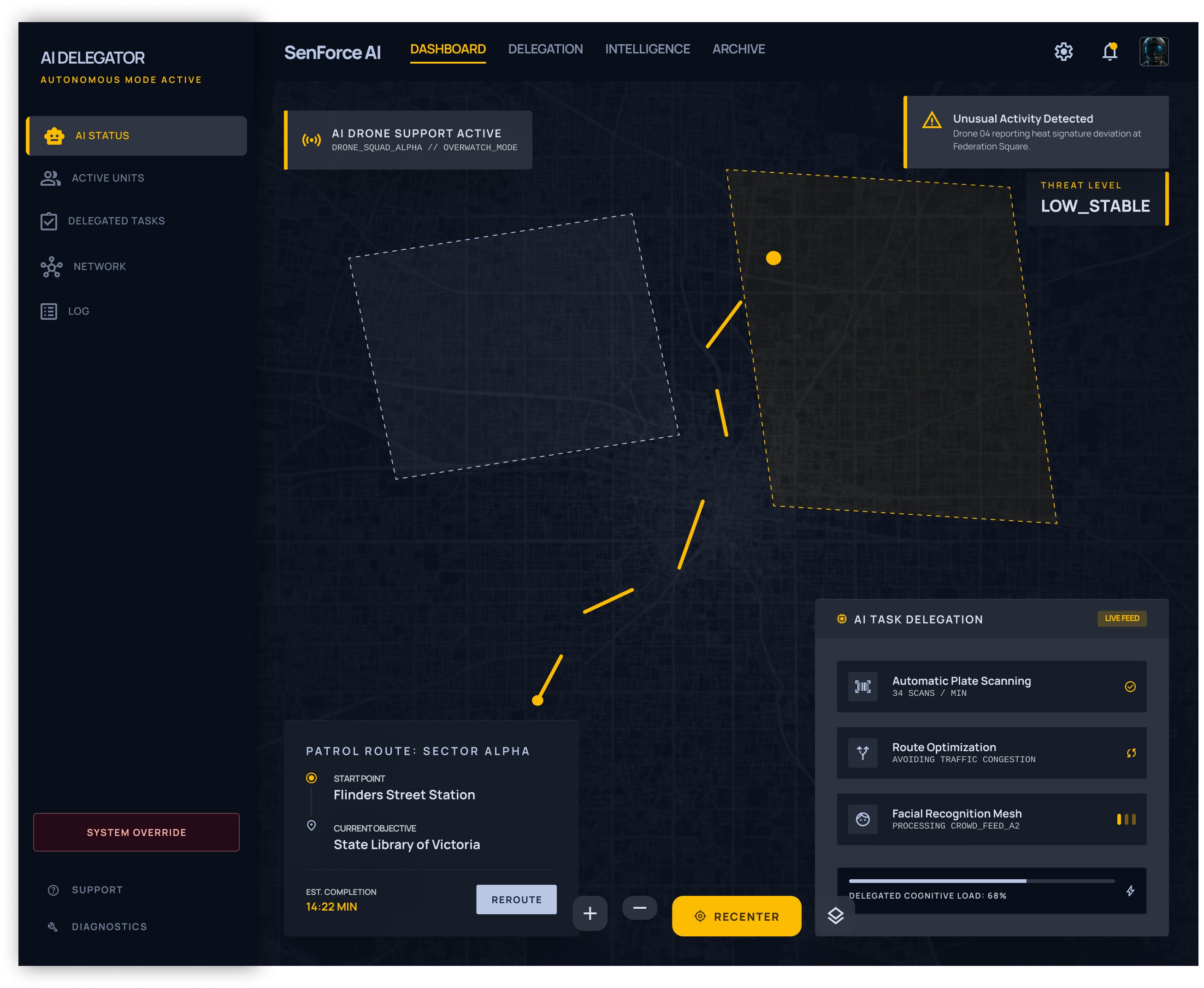
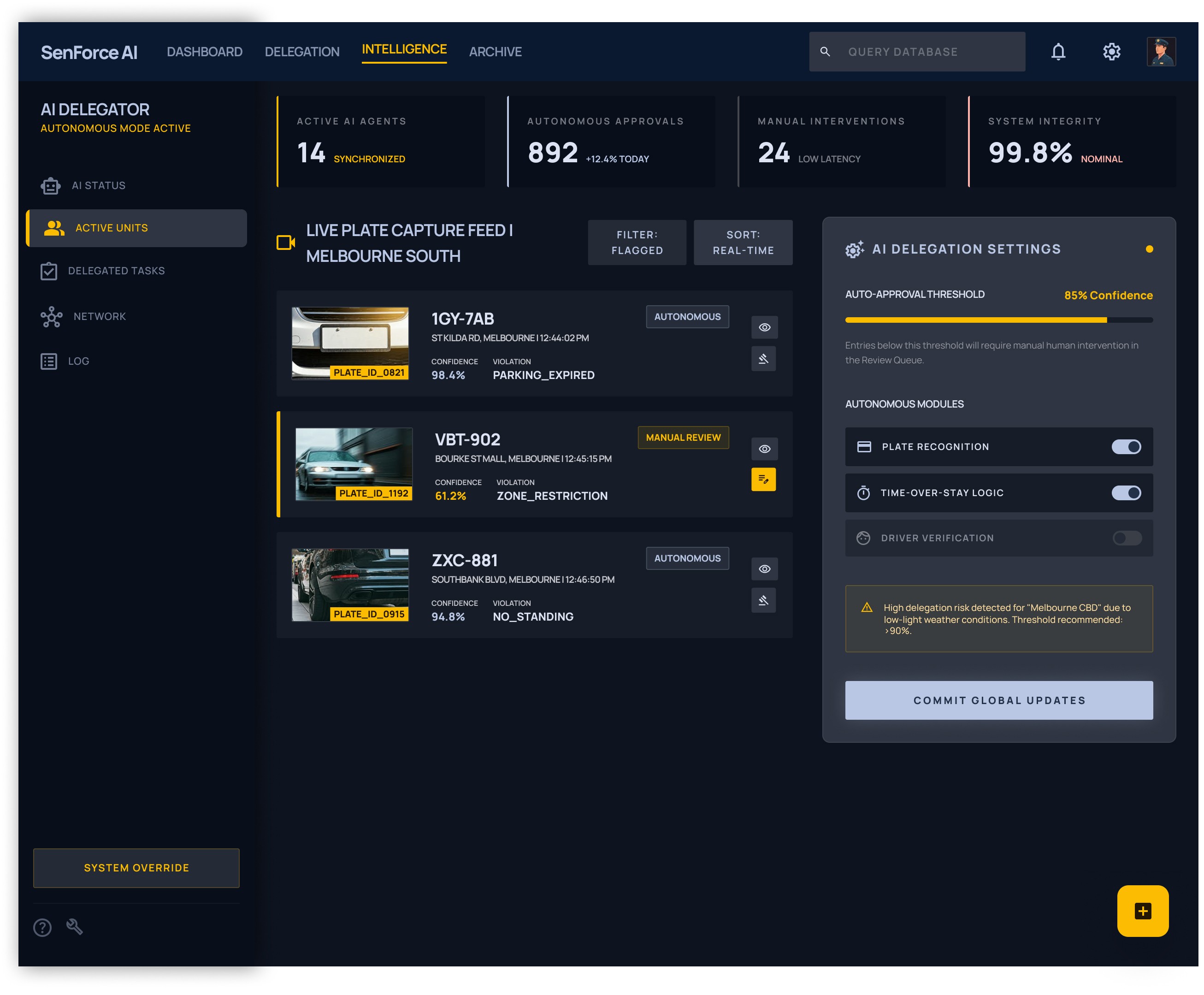
The Shift Handover was the feature that made everything else matter. One screen. Full visibility into what the last shift left behind. No data loss, no restart, no excuses. The analytics dashboard gave supervisors ticket volumes by officer and zone, real-time compliance alerts, and team trend data that turned reactive management into proactive oversight. A three-phase roadmap was designed in from the start — resolve the gap first, connect operations second, enable full customisation third. The platform was never just built to ship. It was built to scale.
A first impression & first learning
The biggest design lesson here had nothing to do with screens. Operational gaps not technology gaps are what silently break enterprise systems. The work was in understanding the moment information got lost before it ever entered the platform, and designing specifically for that handoff. When the shift handover works perfectly, no officer notices it. No supervisor mentions it. The tickets just get resolved. That invisibility is the whole point and the hardest thing to design for.