AI-powered Law firm platform
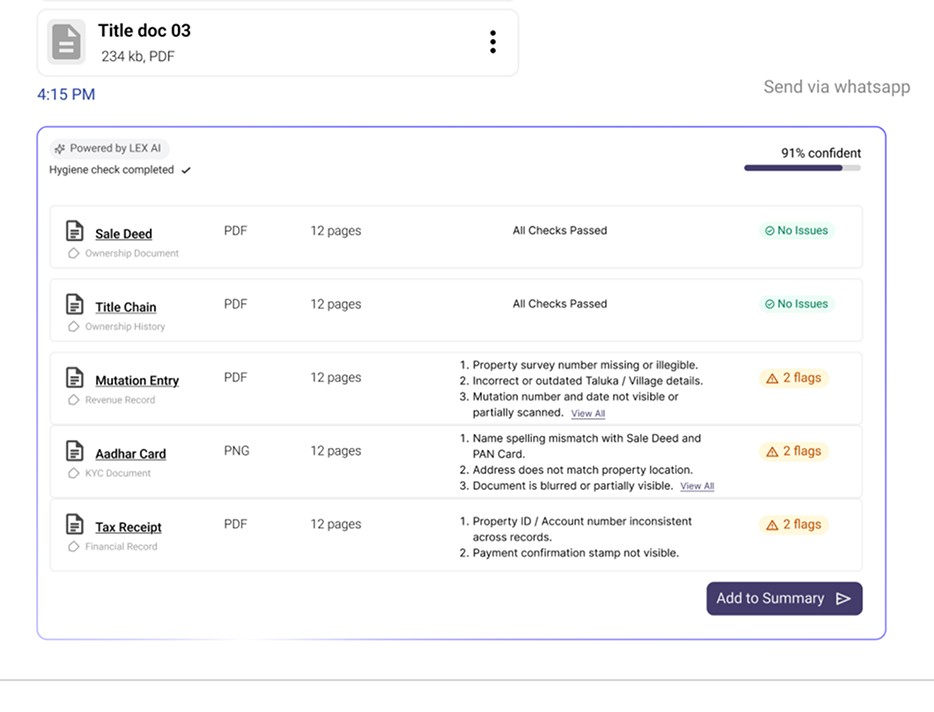
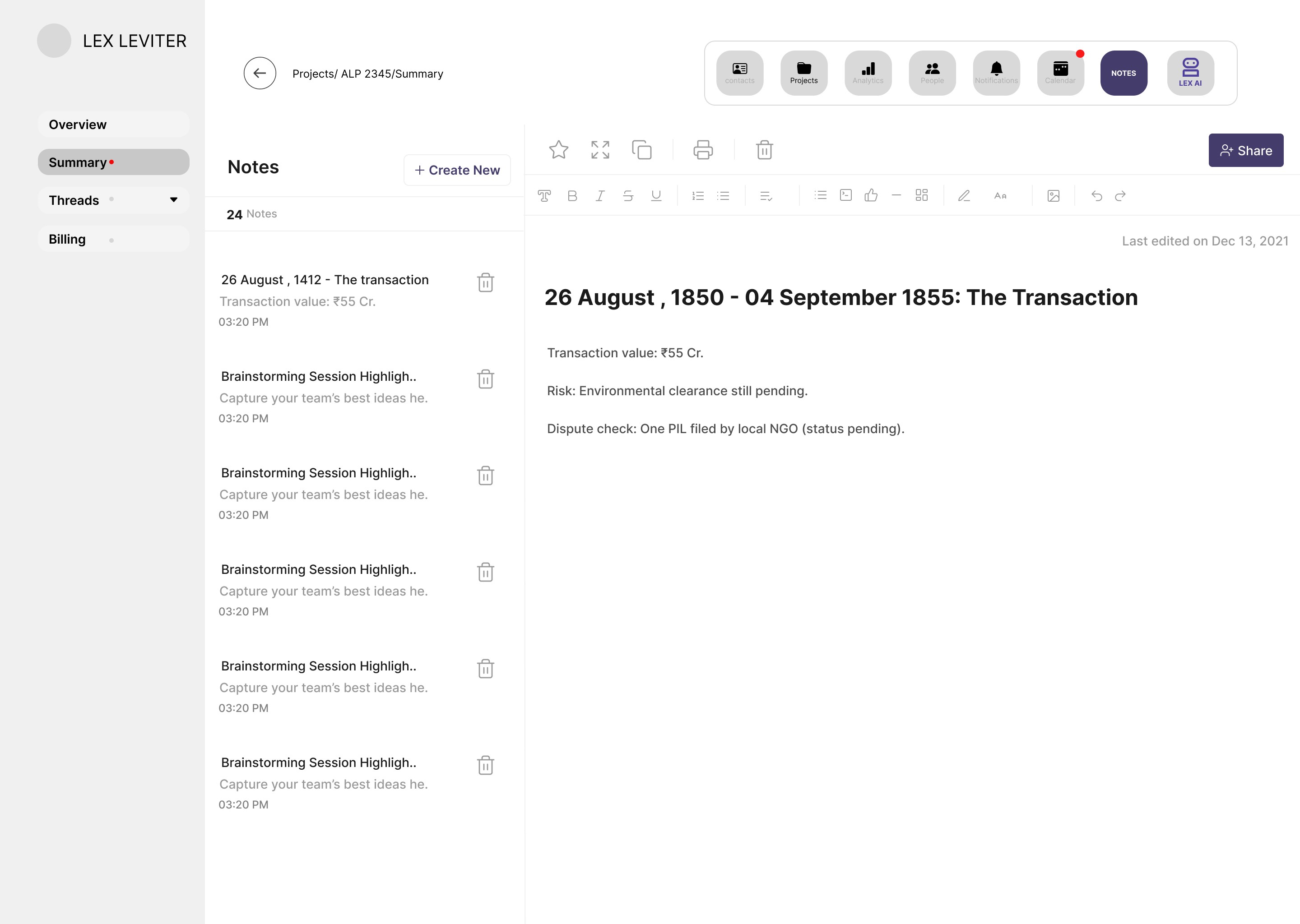
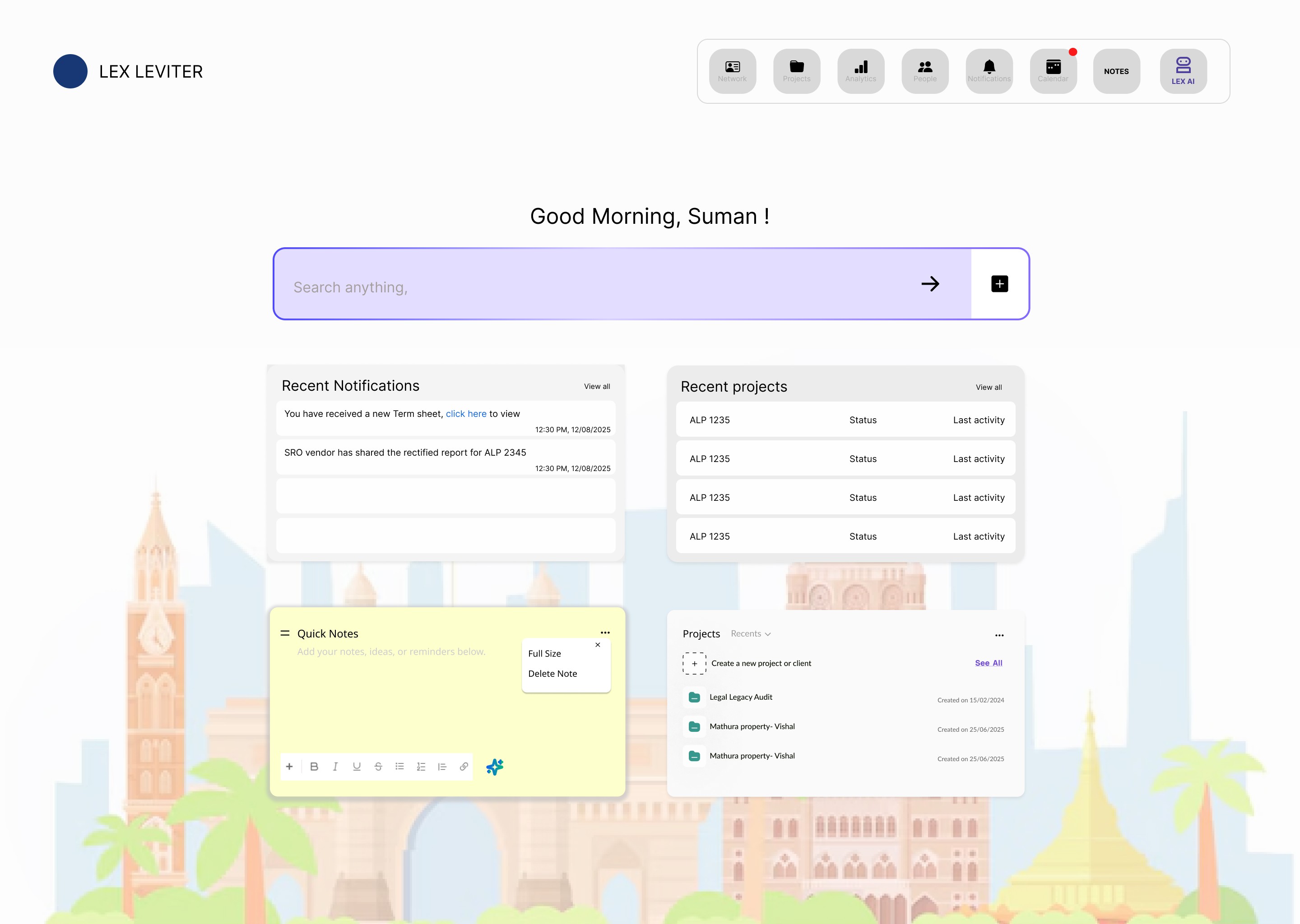
Lex Leviter is an AI-powered legal workflow platform designed for law firms still running operations on WhatsApp, handwritten TSRs, and personal phone calls. The platform consolidates five core workflows, project intake, document hygiene, client threads, legal searches, and TSR generation all into a single intelligent system. Built end to end from a real client brief, Lex Leviter represents what happens when deep domain research meets product thinking in a high-trust, high-stakes legal environment.
ROLE
PROBLEM
The law firm was running entirely on instinct and informal tools as cases managed on WhatsApp, TSRs written by hand with no templates, vendors sourced through personal calls, and zero tracking across any workflow. There was no single source of truth, no process visibility, and no way to scale. The brief was clear: build the alternative.
RESULTS
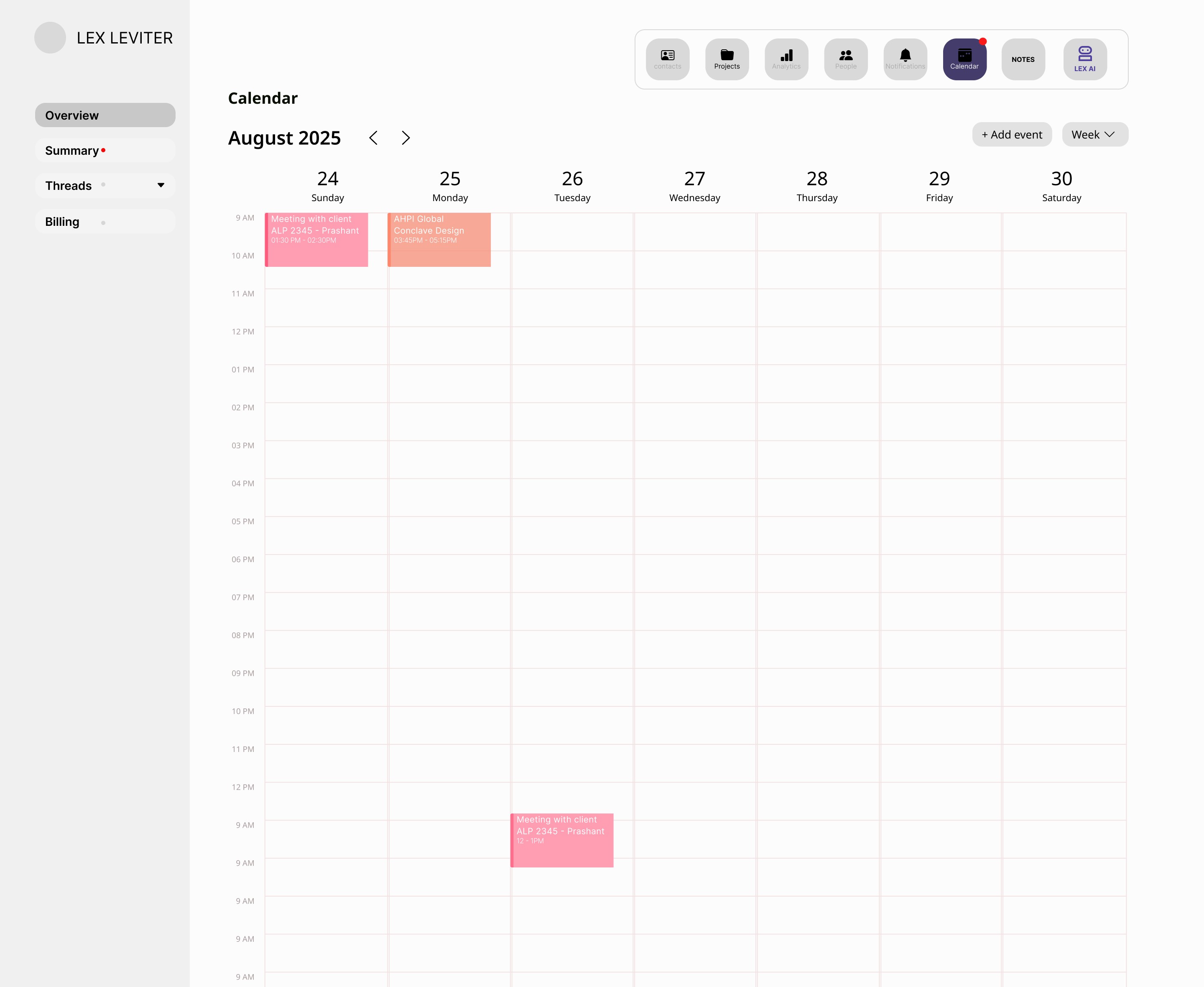
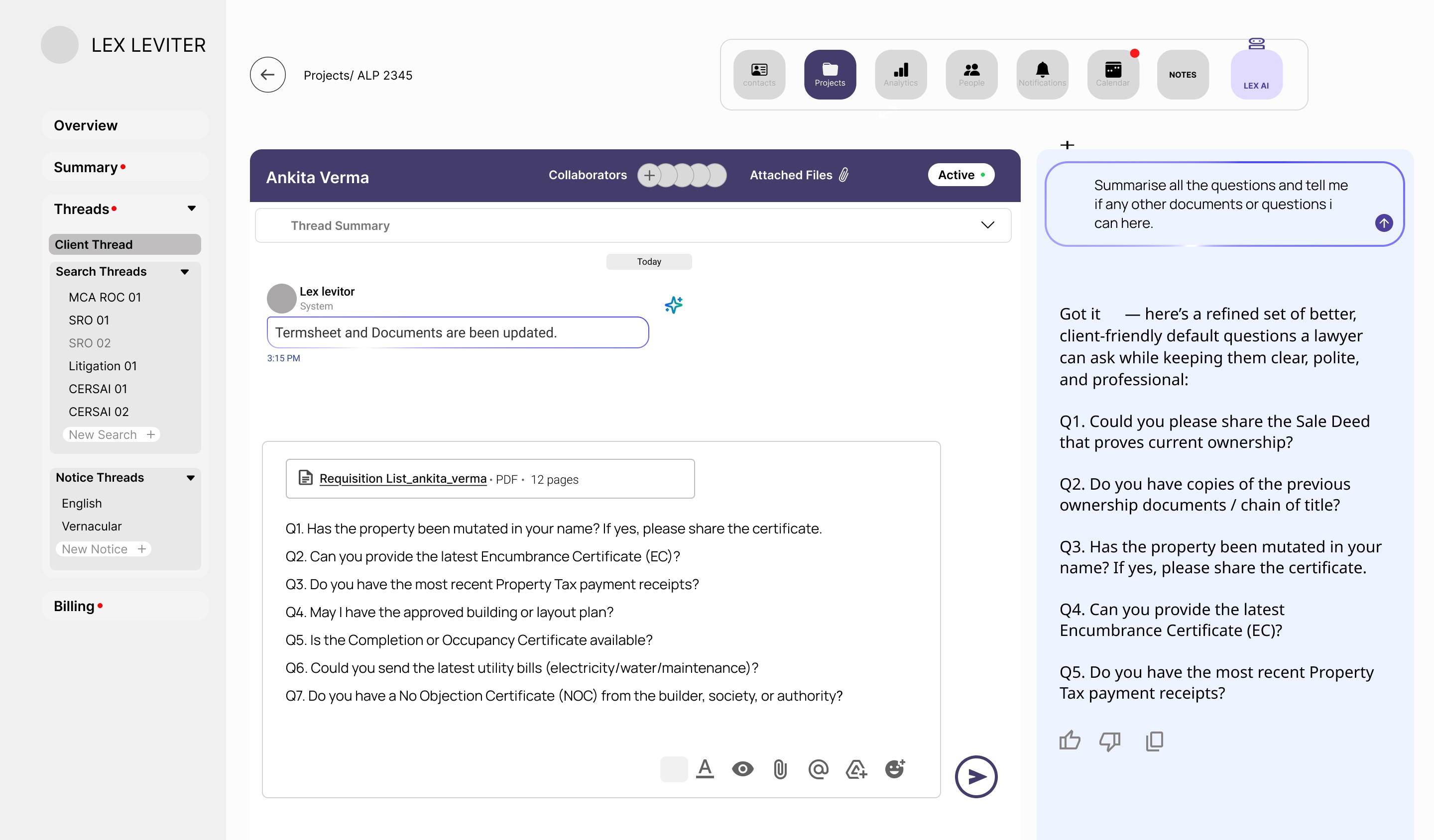
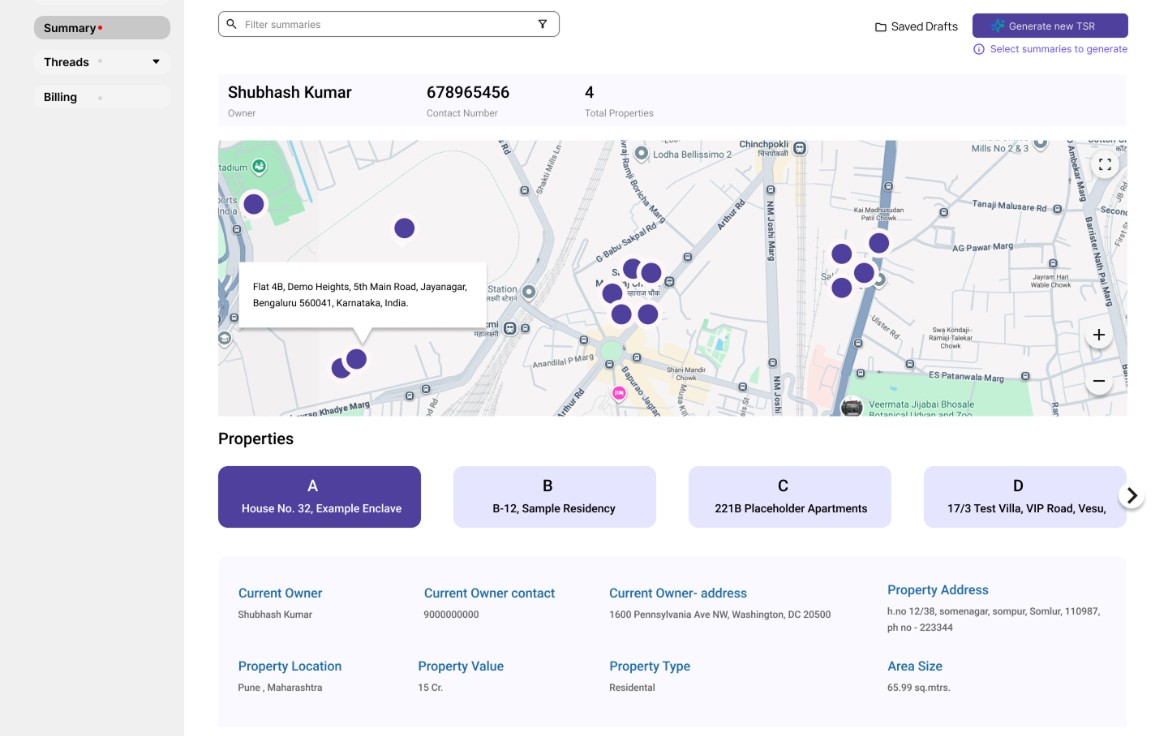
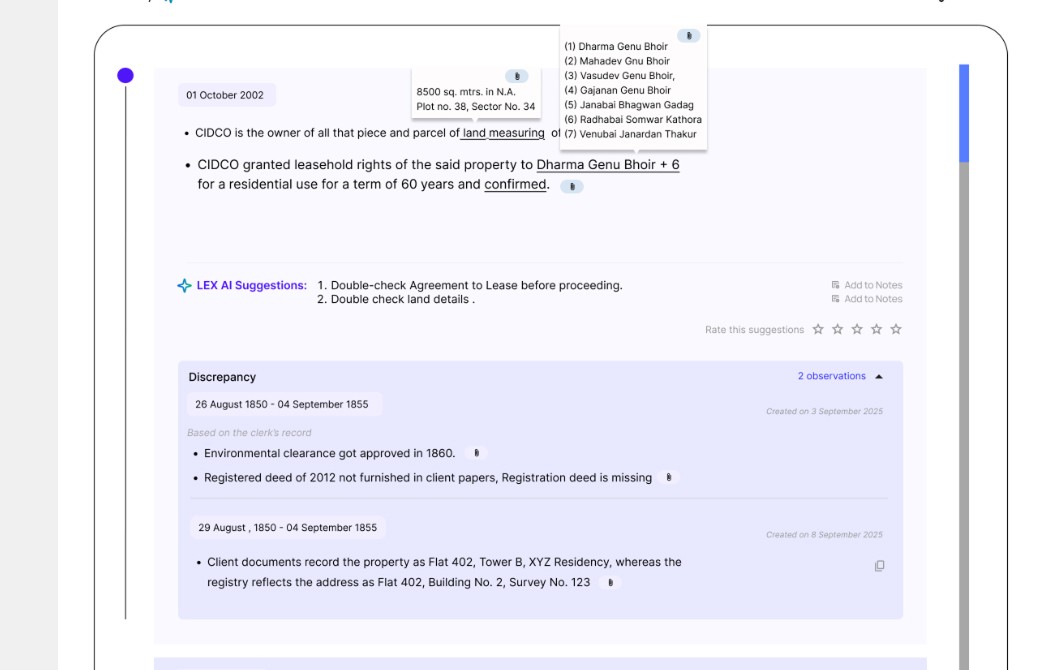
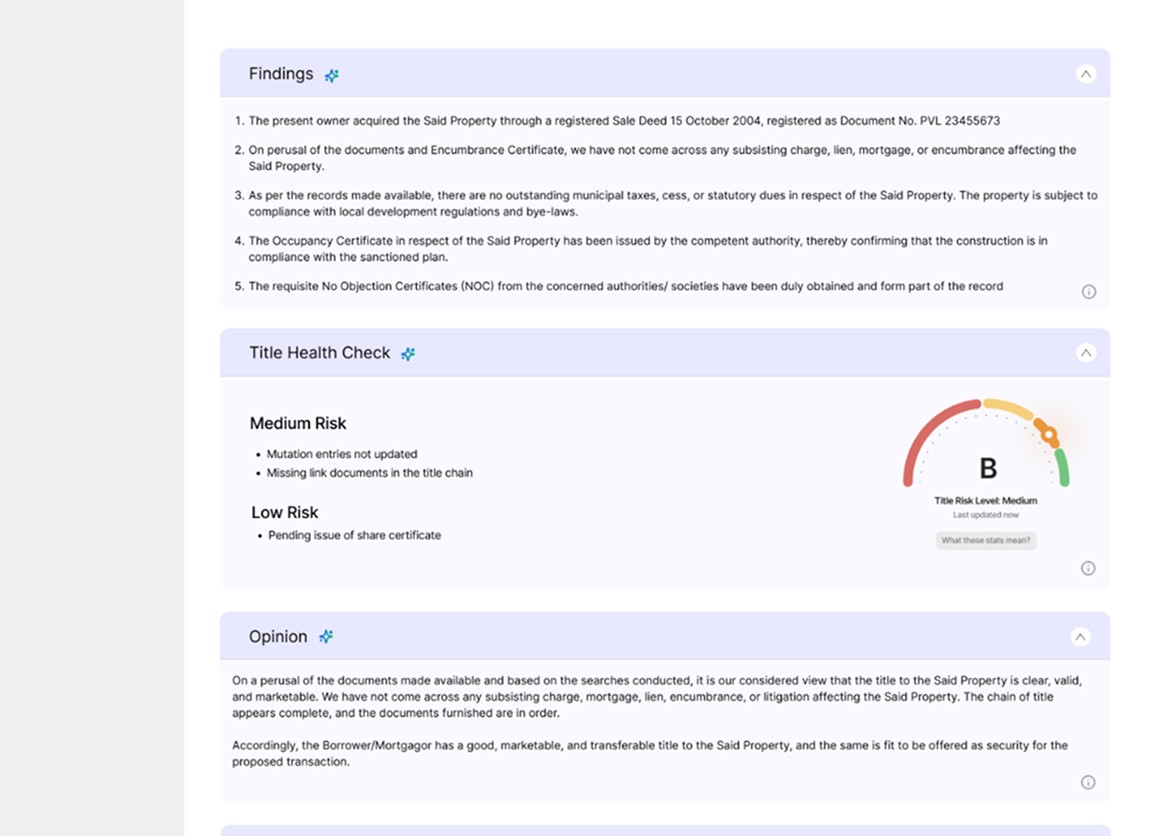
Lex Leviter delivered a platform capable of handling the full legal workflow from signed client to dispatched TSR with zero switching between tools. An embedded AI assistant named Lex made every output explainable and actionable, directly reducing reliance on back-and-forth communication across teams. Every workflow was documented, every AI output was traceable, and the system was competitive enough to ship to market.
Design Decisions That Changed the Product
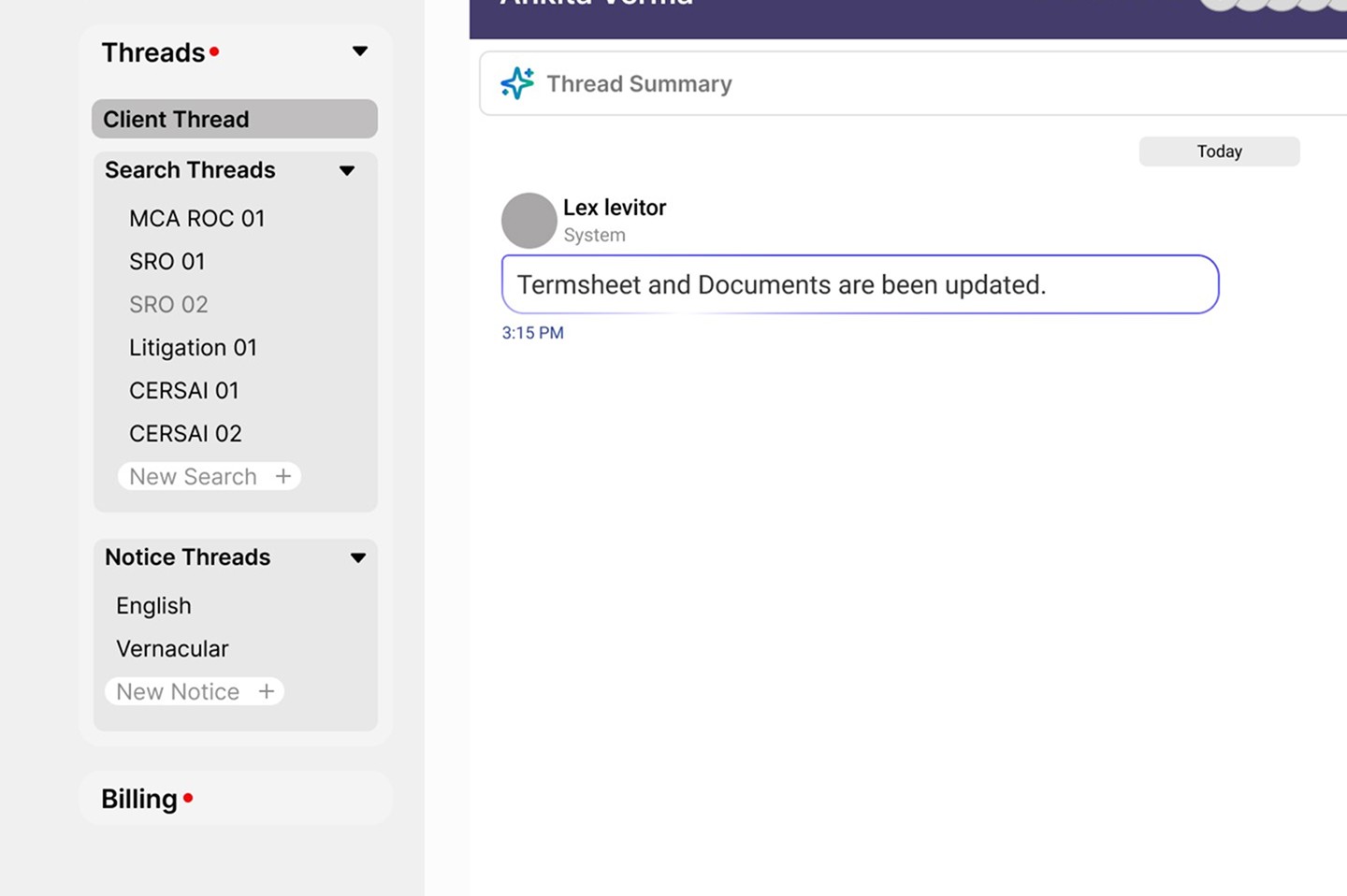
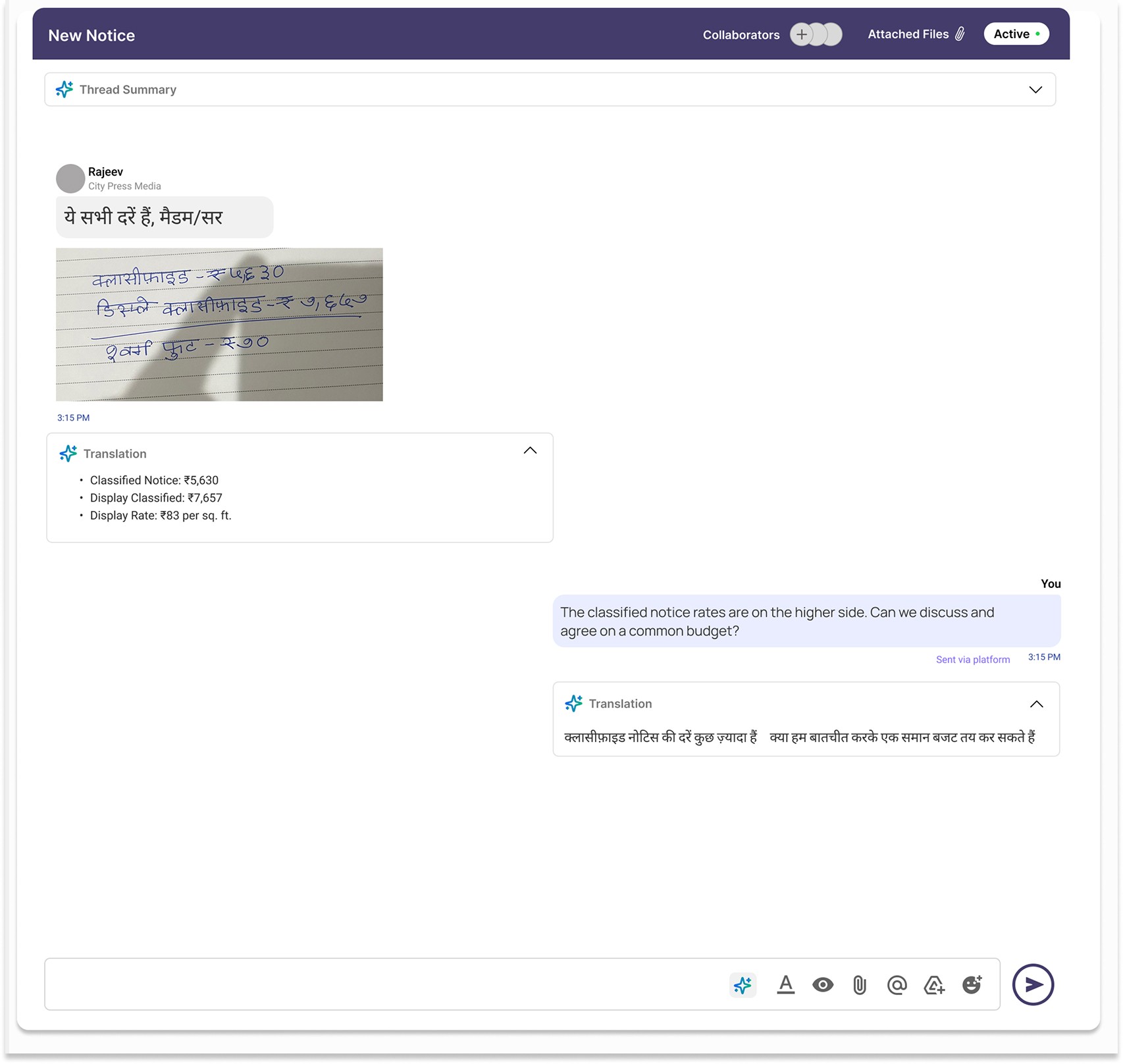
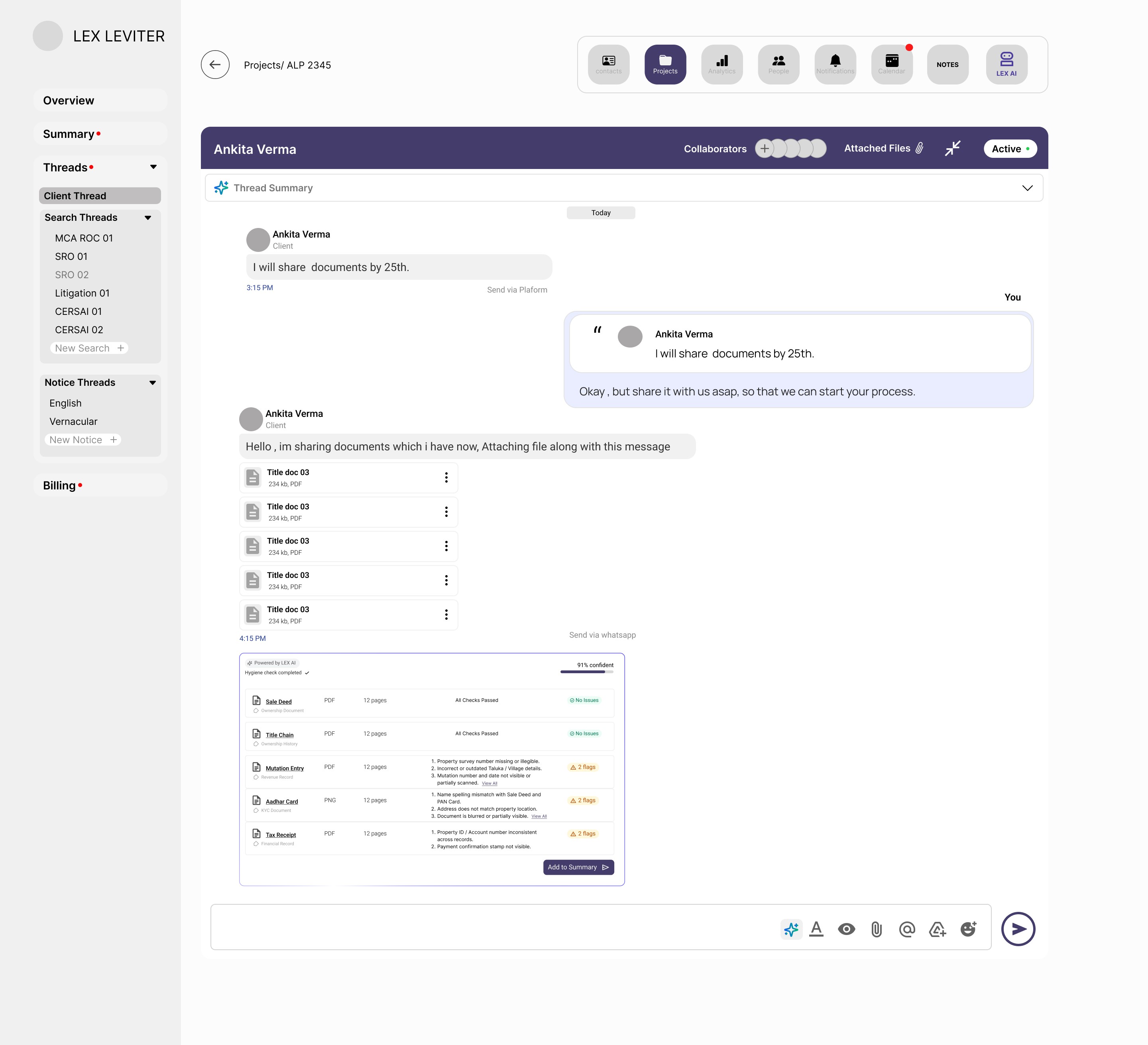
Five decisions defined LexLeviter's direction. A thread-first architecture made client history scannable and contextual. A three-use-case intake model ensured term sheets handled each case type distinctly. An AI Thoughts section brought transparency to every AI-generated output. A vernacular newspaper draft feature auto-generated public notices in regional languages. And a vendor marketplace built directly into the platform eliminated the need for external sourcing calls entirely.
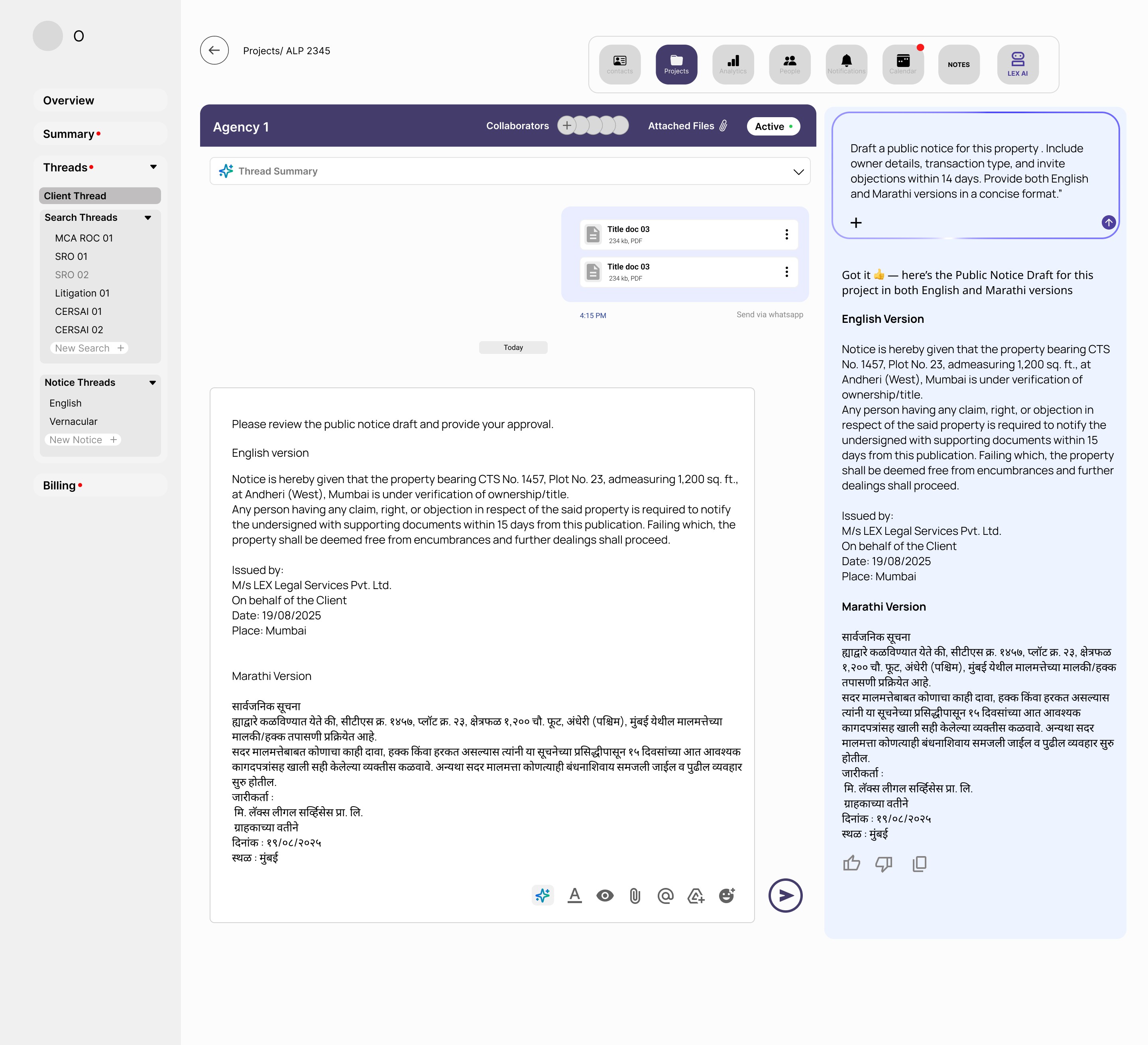
Prompted, not prescribed
Building LexLeviter also became a personal exploration of AI-assisted design. Screens were explored using Figma Make for rapid component generation, Google Stitch for layout ideation, and GitHub Copilot for understanding developer expectations early. n8n was referenced to map automation logic behind AI workflows before translating them into interface decisions.
The process of prompting, iterating, and refining outputs across these tools became a workflow in itself learning firsthand how to design an AI-augmented platform by building with AI throughout. This project was as much a design systems exercise as it was a product one.
Conclusion & Learning
This project taught me that stakeholder management is itself a design skill. The client was not just a research source they were a co-author of every decision, and keeping that relationship honest and productive required as much craft as the screens did. I learned to design for the exception, not just the happy path, because in legal work, edge cases are not edge cases, they are the entire job. Most importantly, this project showed me that AI trust is earned through transparency in every output needs to show its reasoning before a lawyer will act on it.